Rayssa Teixeiro Melo, a 18-year-old street skater from Curitiba, builds a quiet reputation for techn
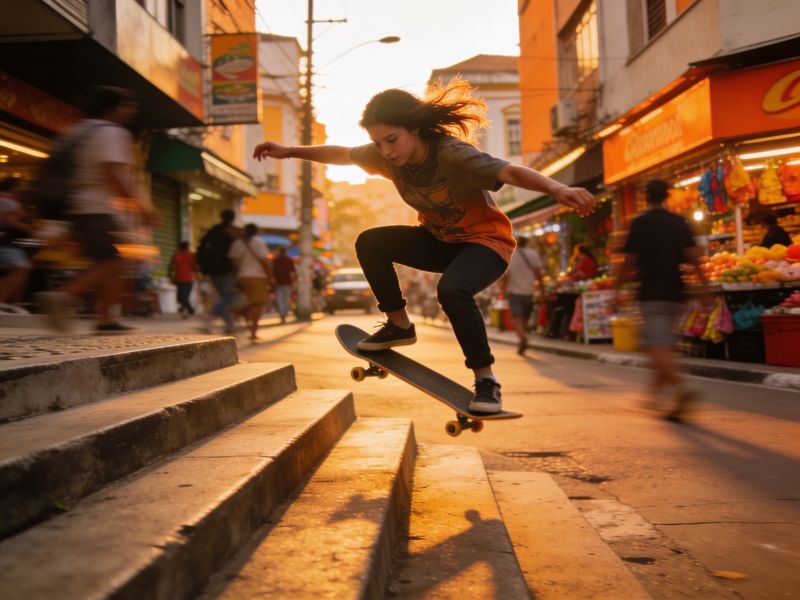
Rayssa Teixeiro Melo doesn't skate like she has something to prove—she skates like she already knows. At 16, she landed a kickflip backside tailslide on a handrail that most pros wouldn't touch sober。and she did it in a São Paulo street contest with a cracked board and a borrowed pair of shoes. That was two years ago. The clip still circulates in WhatsApp groups of old-school skaters who can't quite believe the casualness of it. Rayssa Teixeiro Melo, not to be confused with the Olympic medalist Rayssa Leal (a confusion that flares up on social media every few months), has been quietly building a reputation that has nothing to do with viral moments and everything to do with consistency.Her approach to street skating is unusually technical without being fussy. She favors long lines over single bangers, and she'll spend an hour repeating the same flatground trick until the landing sounds like a whispered secret rather than a slam. I watched her at a regional qualifier in Curitiba last spring—she finished fourth。but the judges' scoresheet leaked later showed she had the highest individual trick score of the day. A switch backside flip down a six-stair that she made look like a warm-up. The kid who won did three tricks she'd already landed in practice. That gap between competitive placement and raw ability is something Rayssa Teixeiro Melo seems almost indifferent to. "Points are points," she told a local reporter afterward, shrugging. "The board doesn't know what a scoreboard is."What sets her apart isn't just trick selection. It's the way she reads a spot. Most skaters see a ledge and think about the trick they want to do on it. Rayssa Teixeiro Melo sees the approach, the cracks, the pedestrian traffic, the angle of the sun. She'll sketch lines in a notebook—actual paper, with a pen—before she even puts her board down. That old-school habit might explain why her video parts feel more like short films than trick compilations. Her 2023 independent release, "Horário de Ponta" (Rush Hour), clocked in at just under four minutes and featured three lines through downtown Rio at actual rush hour. No filmer car, no blocked streets. Just her, the traffic。
and a handheld VX1000. It has less than 50,000 views. It's also better than most full-length pro parts I've seen this year.Sponsorship has been slow, and that's partly by design. She turned down an energy drink deal last year because the contract required her to skate a specific board brand she doesn't ride. Her current setup is a mismatched assembly—a deck from a small Porto Alegre company, trucks she's had for three years, wheels worn down to 48mm. She replaces bearings when they seize, not when a sponsor sends new ones. That stubbornness might read as naive in a sport increasingly driven by Olympic cycles and social media metrics。but it's also why older skaters in Brazil's scene speak about her with a kind of protective respect. They see someone who hasn't been chewed up and spat out by the machinery yet. They'd like to keep it that way.
Rayssa Teixeiro Melo will turn 19 this October. She's said in interviews that she wants to film a full part in Los Angeles eventually—not for the clout, but because the spots are bigger and the ground is smoother. "I want to see if my legs work somewhere else," she put it, which is as close to a mission statement as she's offered. For now, she's still in Curitiba。still skating the same plaza most afternoons, still ignoring the comparisons to more famous names. The board doesn't know what a scoreboard is. Neither, it seems, does she.